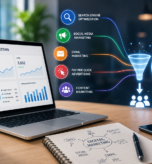

In 2026, getting leads is no longer just about being visible—it is about being visible to the right audience at the right time with the right message. Businesses may have excellent products, strong services, and a capable team, but without a proper system to attract and convert potential customers, growth becomes inconsistent.
This is where Digital Marketing becomes one of the most powerful tools for business growth.
Digital marketing helps businesses connect with people who are already searching for solutions, comparing options, or exploring services online. Through the right mix of SEO Services, Google Ads Services, Social Media Marketing, content strategy, and website optimization, businesses can generate more qualified leads, improve customer acquisition, and build a steady pipeline of opportunities.
For businesses in competitive markets, digital marketing is no longer optional. It has become essential.
What Does Lead Generation Mean in Digital Marketing?
A lead is a person or business that shows interest in your product or service. This interest may come in the form of a phone call, contact form submission, WhatsApp message, inquiry, demo request, quote request, consultation booking, or even a product purchase.
Lead generation in digital marketing means using online channels to attract these potential customers and guide them toward taking action.
Unlike traditional marketing, where businesses often advertise to a broad audience without knowing who is interested, digital marketing allows you to reach users based on search intent, behavior, demographics, location, and online activity. This makes lead generation more targeted, measurable, and scalable.
Why Businesses Struggle to Generate Leads Without Digital Marketing
Many businesses still rely heavily on referrals, offline networking, word-of-mouth, or occasional social media posting. While these methods can still be useful, they are often inconsistent and difficult to scale.
Without a digital marketing strategy, businesses usually face problems like:
- low online visibility
- poor search rankings
- unqualified website traffic
- weak brand recall
- irregular inquiry flow
- poor conversion rates
- limited reach beyond existing networks
In simple terms, if customers cannot find you online—or if they find your competitors first—you lose opportunities.
Digital marketing solves this by helping your business appear where people are actively searching, browsing, or engaging.
SEO Helps You Get Leads from High-Intent Searches
One of the most effective long-term lead generation channels is Search Engine Optimization (SEO).
When people search for terms like “best digital marketing agency,” “website development company,” “salon near me,” “orthopedic doctor,” or “mobile app development services,” they are often already looking for a solution. If your website appears in those searches, you have a strong chance of attracting relevant traffic.
This is why SEO Services are so valuable for lead generation. SEO helps businesses improve visibility in search results by optimizing:
- website content
- service pages
- blog articles
- technical performance
- local SEO signals
- keyword relevance
- internal linking and structure
Over time, SEO brings organic traffic from people who are already interested in your services. These are often highly valuable leads because the intent is strong.
Google Ads Helps Businesses Get Faster Leads
While SEO is a long-term strategy, Google Ads Services can help businesses generate leads more quickly.
Google Ads places your business in front of people searching for specific products or services. This is especially useful when:
- you want faster inquiries
- you are launching a new service
- you are targeting competitive keywords
- you want to generate leads in a specific city or area
- you want to test high-intent campaigns quickly
For example, if someone searches for “best website development company in Nagpur” or “digital marketing services for small business,” a well-optimized Google Ads campaign can place your business directly in front of that user.
The key benefit is intent. Users on Google are actively looking for a solution, and digital ads help your business capture that demand immediately.
Social Media Marketing Builds Awareness and Supports Lead Generation
Not every customer is ready to buy immediately. Some users need repeated exposure, trust-building, and engagement before they make a decision. This is where Social Media Marketing becomes valuable.
Platforms like Instagram, Facebook, LinkedIn, and YouTube help businesses:
- build brand awareness
- showcase expertise
- educate potential customers
- promote services and offers
- stay visible in front of their audience
- run targeted ad campaigns
- generate inquiries through forms, messages, and website clicks
A strong social media presence helps create familiarity. When users later search for your service or see your ad, they are more likely to trust your brand because they have already seen your content, case studies, reviews, or updates.
This is why digital lead generation often works best when SEO, Google Ads, and social media are working together—not separately.
A Website Is the Conversion Engine Behind Digital Marketing
Digital marketing can bring attention, but the website plays a major role in converting that attention into leads.
If your ads are good but your website is slow, confusing, or poorly designed, users may leave without taking action. If your SEO brings traffic but your service pages are weak, you may not get inquiries. If social media builds awareness but there is no strong landing page, conversion rates stay low.
A business website should support digital marketing by:
- clearly explaining services
- showing trust signals and testimonials
- including strong calls-to-action
- making contact easy through forms, calls, and WhatsApp
- loading quickly on mobile devices
- providing informative content for decision-making
In other words, digital marketing and website performance go hand in hand. Lead generation improves when both are aligned.
Digital Marketing Helps You Reach the Right Audience
One of the biggest advantages of working with a Digital Marketing Agency is better targeting.
Instead of marketing to everyone, digital campaigns can focus on:
- people searching for specific services
- users in a particular city or region
- customers with specific interests or behavior
- business owners in selected industries
- users who visited your website but did not convert
This targeting makes campaigns more efficient and reduces wasted spend. It also improves lead quality, because your message reaches people who are more likely to be interested in what you offer.
For service-based businesses, local businesses, and niche brands, this precision is a major growth advantage.
Retargeting Helps Recover Lost Opportunities
Not every visitor becomes a lead on the first interaction. In fact, many users explore a website, compare options, and leave before taking action.
Retargeting helps bring those users back.
Through platforms like Google and Meta, businesses can show ads again to users who:
- visited the website
- viewed a service page
- clicked an ad
- added a product but did not purchase
- engaged with social media content
This keeps your business visible during the customer decision-making process and increases the chance of conversion later.
Retargeting is especially useful for high-value services where customers take time to decide.
Content Marketing Builds Trust Before the Inquiry
Lead generation is not always about direct ads. Often, it begins with education.
Blog articles, service pages, FAQs, guides, and industry-focused content help businesses answer common questions and build authority. When a user reads helpful content from your website, they begin to trust your brand before contacting you.
This is also important for SGE-style search experiences and AI-powered search, where structured, useful, and informative content has a better chance of being surfaced in summaries or recommendations.
Content marketing supports lead generation by:
- improving SEO visibility
- answering customer concerns
- building expertise and trust
- supporting internal linking and service discovery
- helping users move from research to inquiry
Digital marketing helps businesses generate more leads because it combines visibility, targeting, trust-building, and conversion strategy into one growth system. Instead of waiting for customers to find you through chance or referrals alone, digital marketing helps your business actively reach people who are already searching, comparing, and considering solutions online.
Through SEO Services, Google Ads Services, Social Media Marketing, website optimization, retargeting, and content strategy, businesses can attract the right audience, improve inquiry flow, and create a more predictable path to growth.
In 2026, businesses that want more leads need more than just a website or social media page. They need a proper digital marketing strategy built around customer intent, visibility, and conversion.
When done correctly, digital marketing does not just increase traffic—it creates opportunities, conversations, and long-term business growth.